Designed by Ubald Klug for De Sede in 1974, the DS-1025 “Terrazza” is one of the most recognizable sculptural seating designs produced by the Swiss manufacturer. The model takes its name from the stepped form of terraced landscapes, expressed through a sequence of upholstered horizontal tiers that create both the visual identity and the ergonomic support of the sofa.
The design reflects De Sede’s tradition of combining expressive forms with exceptionally thick, high-quality leather upholstery. Each tier functions as a structural cushion, creating a layered profile that allows the body to settle naturally into the seat while maintaining the graphic clarity of the composition.
Produced in Switzerland during the 1970s, the DS-1025 represents a distinctive moment in post-modern European seating design when furniture began to move toward more architectural and sculptural forms. Ubald Klug’s design stands out for its clarity and boldness, transforming a conventional sofa into a geometric landscape of soft volumes.
This example is upholstered in black leather and offered as a pair of matching sofas, allowing the configuration seen in the photographs where the forms mirror one another to create a symmetrical composition.
De Sede remains known for its meticulous leather craftsmanship, and the DS-1025 is among the brand’s most recognizable and collectible designs from the period.
Designed by Ubald Klug for De Sede in 1974, the DS-1025 “Terrazza” is one of the most recognizable sculptural seating designs produced by the Swiss manufacturer. The model takes its name from the stepped form of terraced landscapes, expressed through a sequence of upholstered horizontal tiers that create both the visual identity and the ergonomic support of the sofa.
The design reflects De Sede’s tradition of combining expressive forms with exceptionally thick, high-quality leather upholstery. Each tier functions as a structural cushion, creating a layered profile that allows the body to settle naturally into the seat while maintaining the graphic clarity of the composition.
Produced in Switzerland during the 1970s, the DS-1025 represents a distinctive moment in post-modern European seating design when furniture began to move toward more architectural and sculptural forms. Ubald Klug’s design stands out for its clarity and boldness, transforming a conventional sofa into a geometric landscape of soft volumes.
This example is upholstered in black leather and offered as a pair of matching sofas, allowing the configuration seen in the photographs where the forms mirror one another to create a symmetrical composition.
De Sede remains known for its meticulous leather craftsmanship, and the DS-1025 is among the brand’s most recognizable and collectible designs from the period.

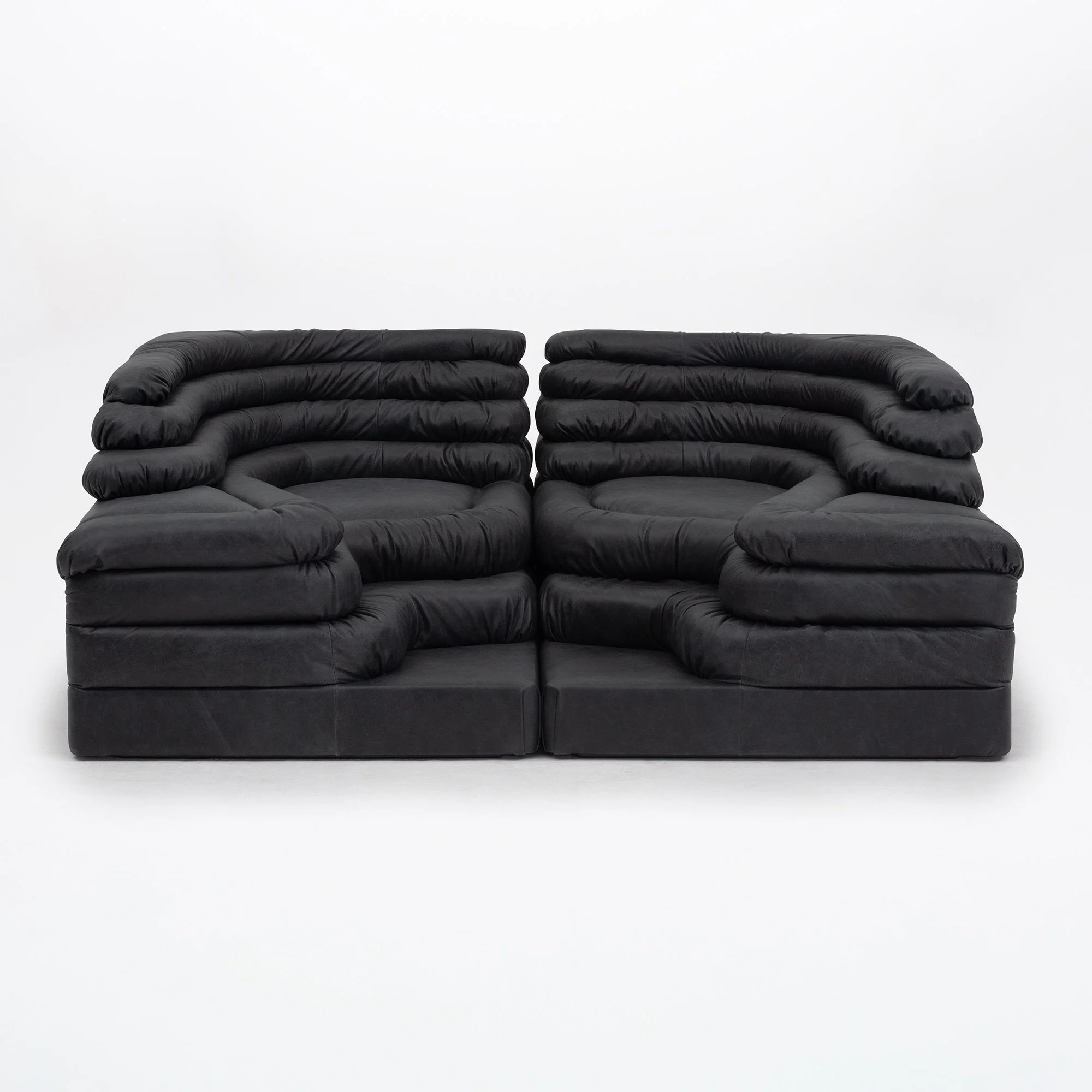 Image 1 of 17
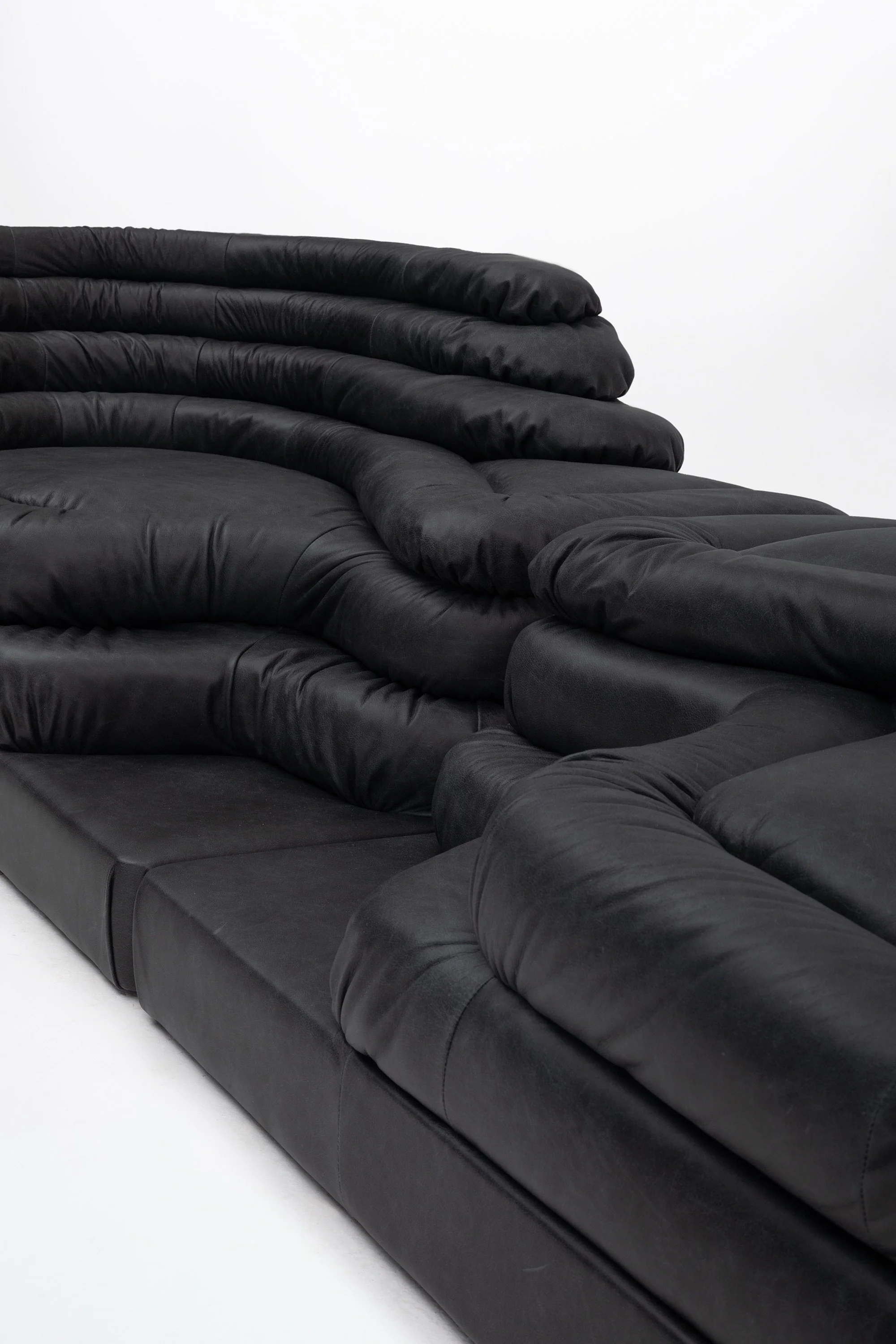 Image 2 of 17
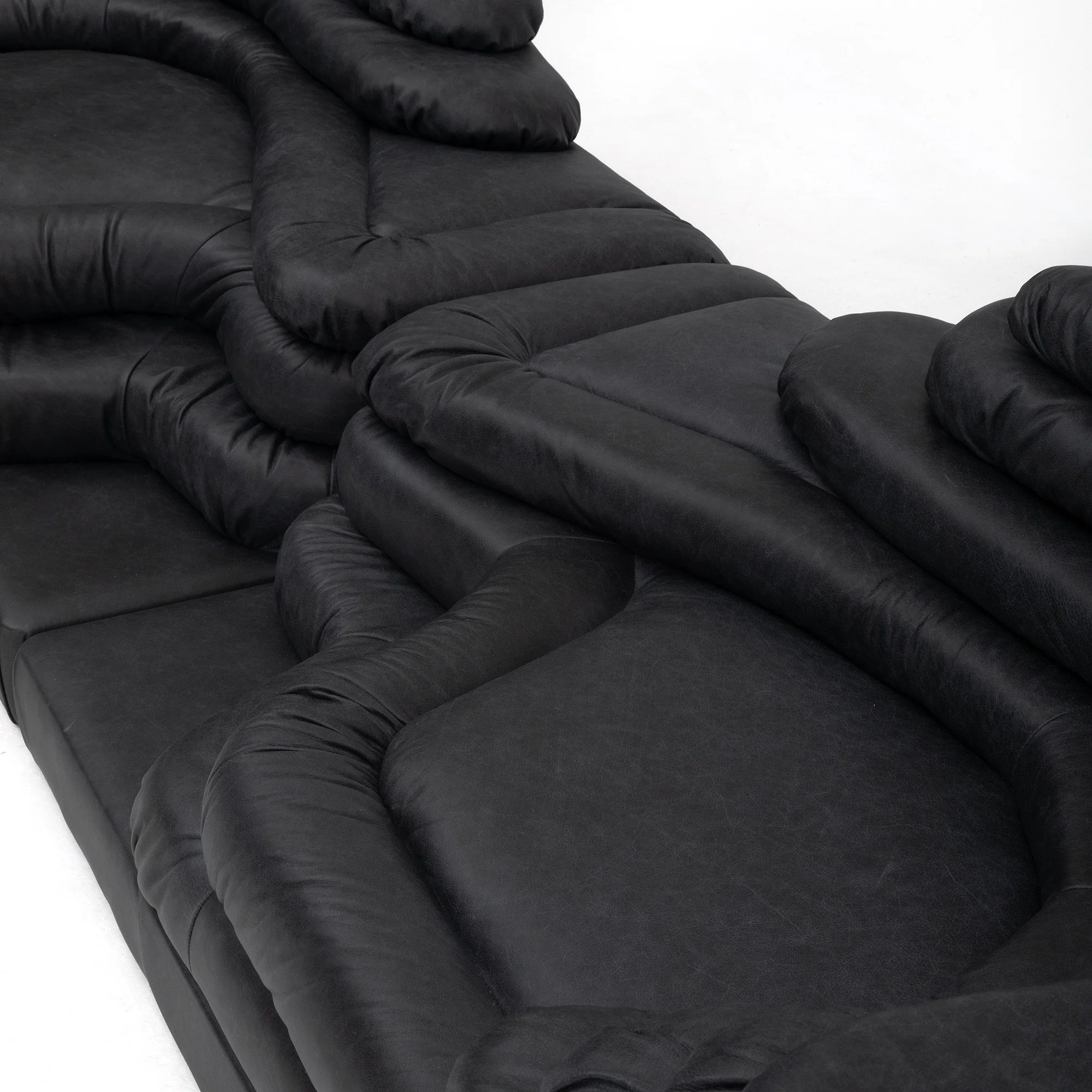 Image 3 of 17
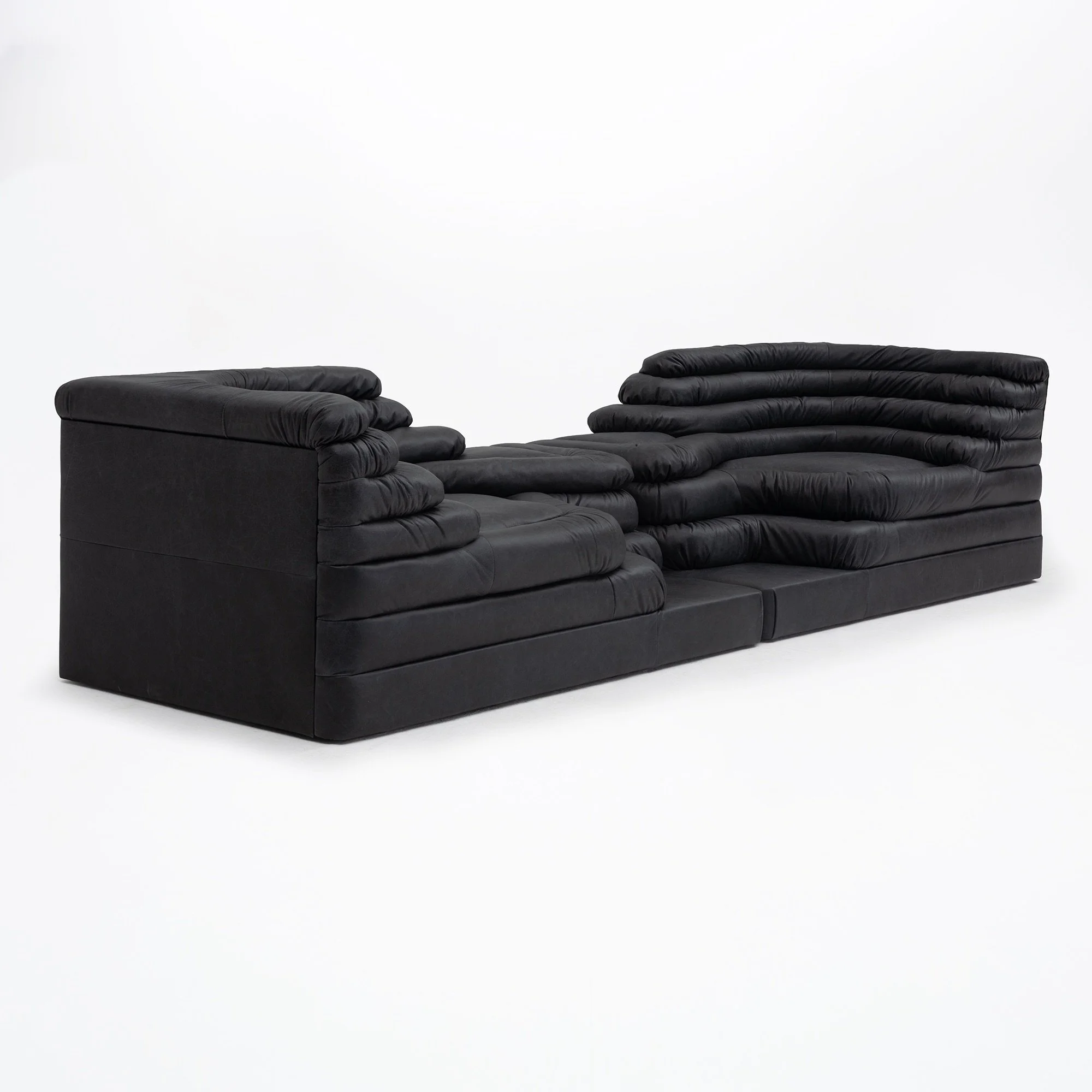 Image 4 of 17
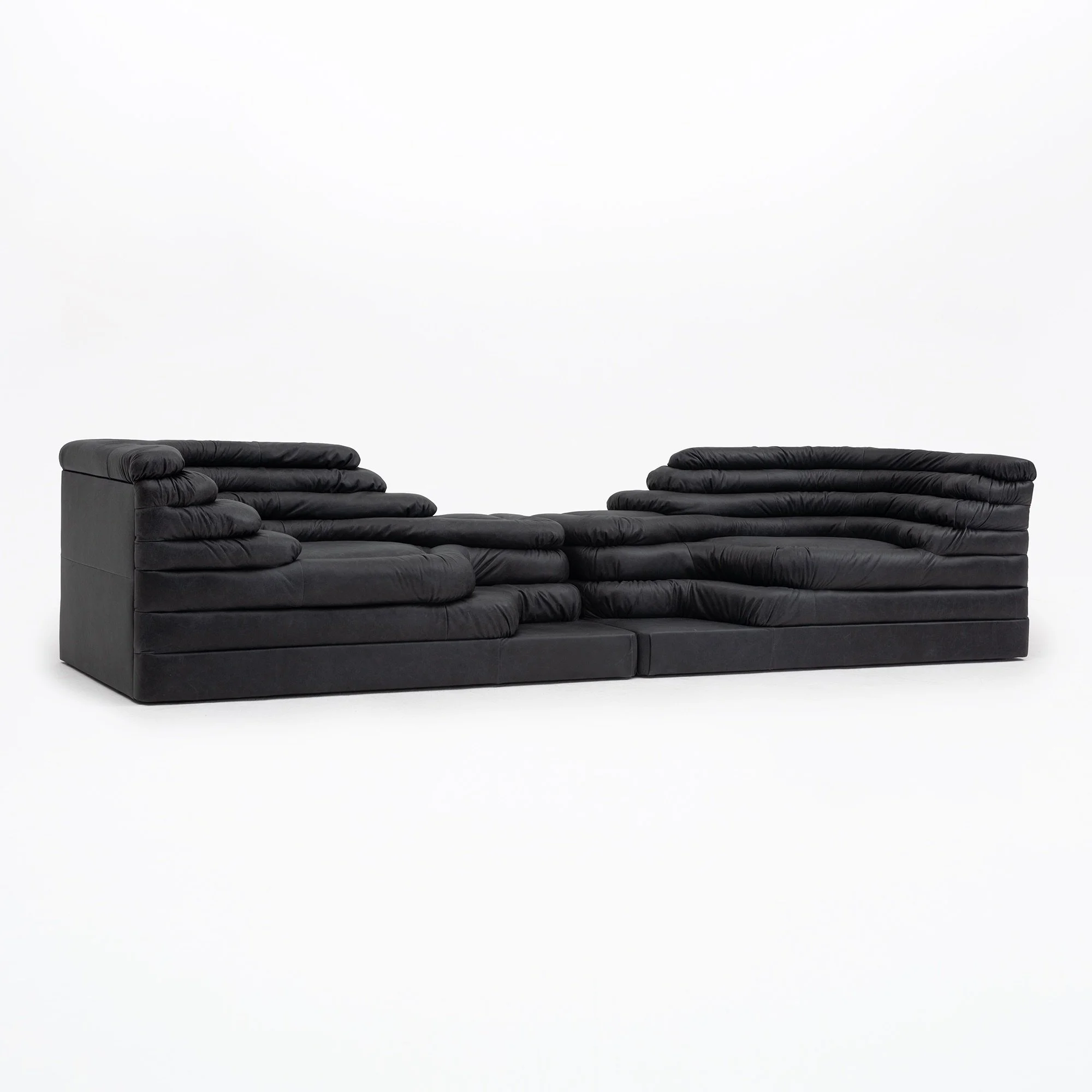 Image 5 of 17
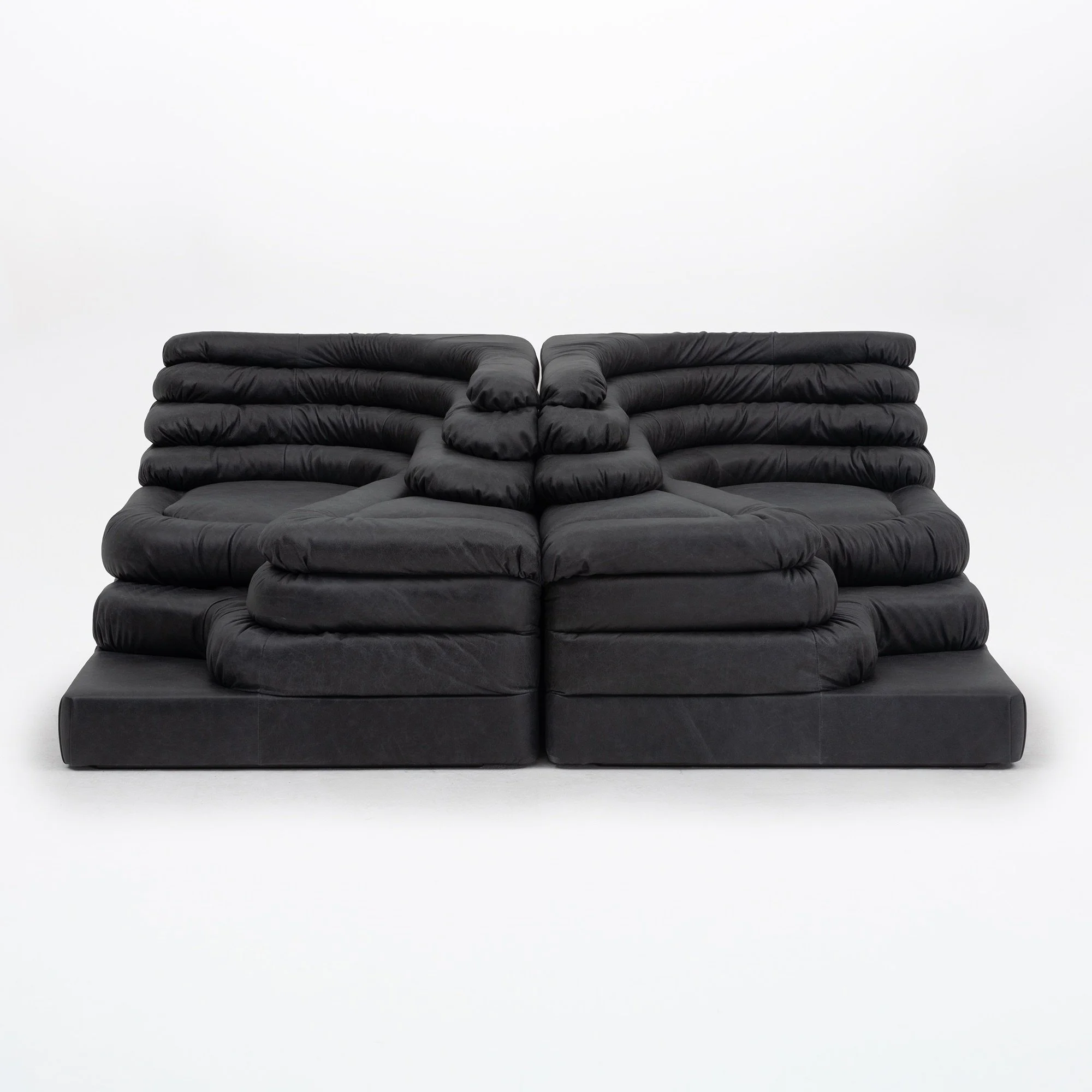 Image 6 of 17
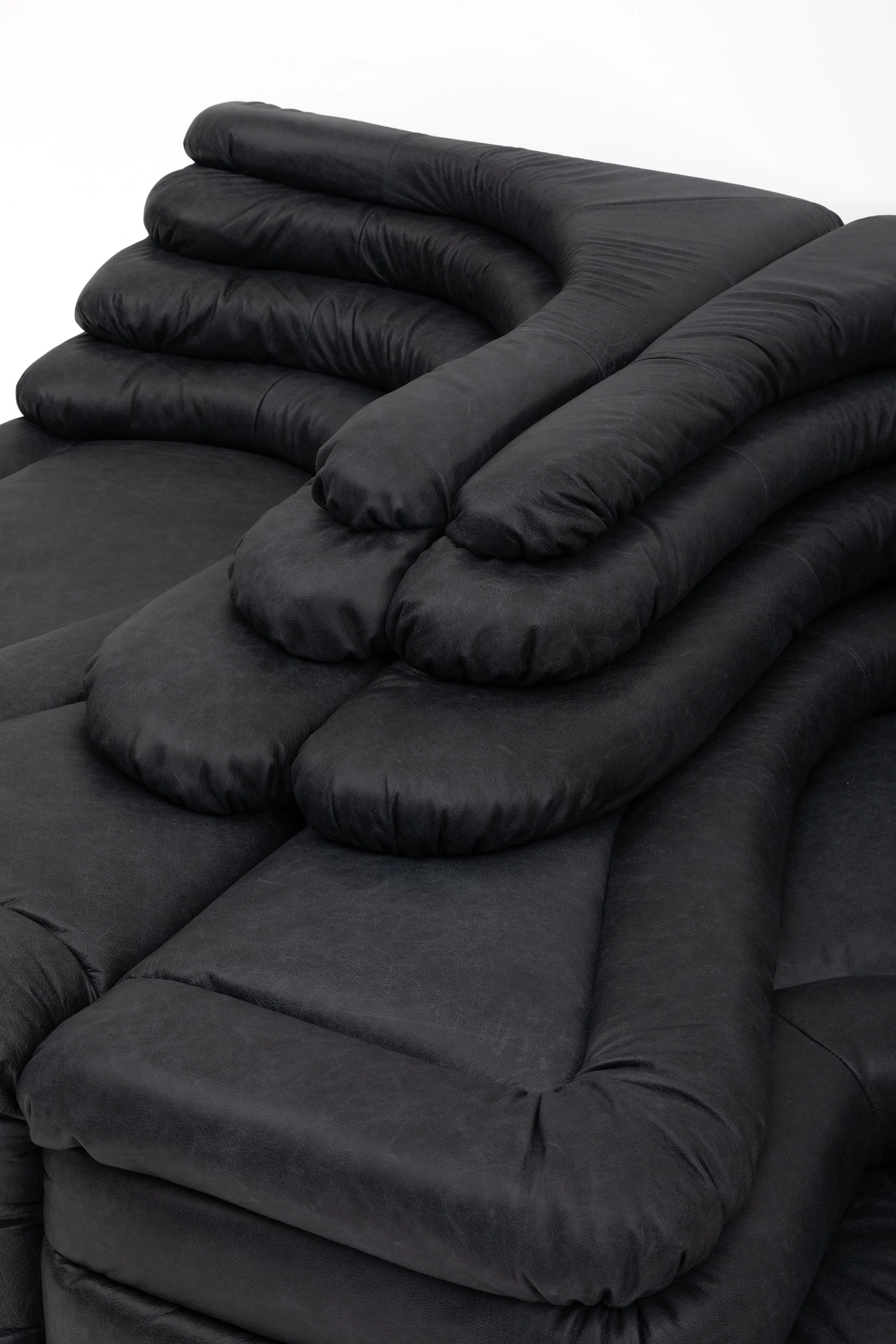 Image 7 of 17
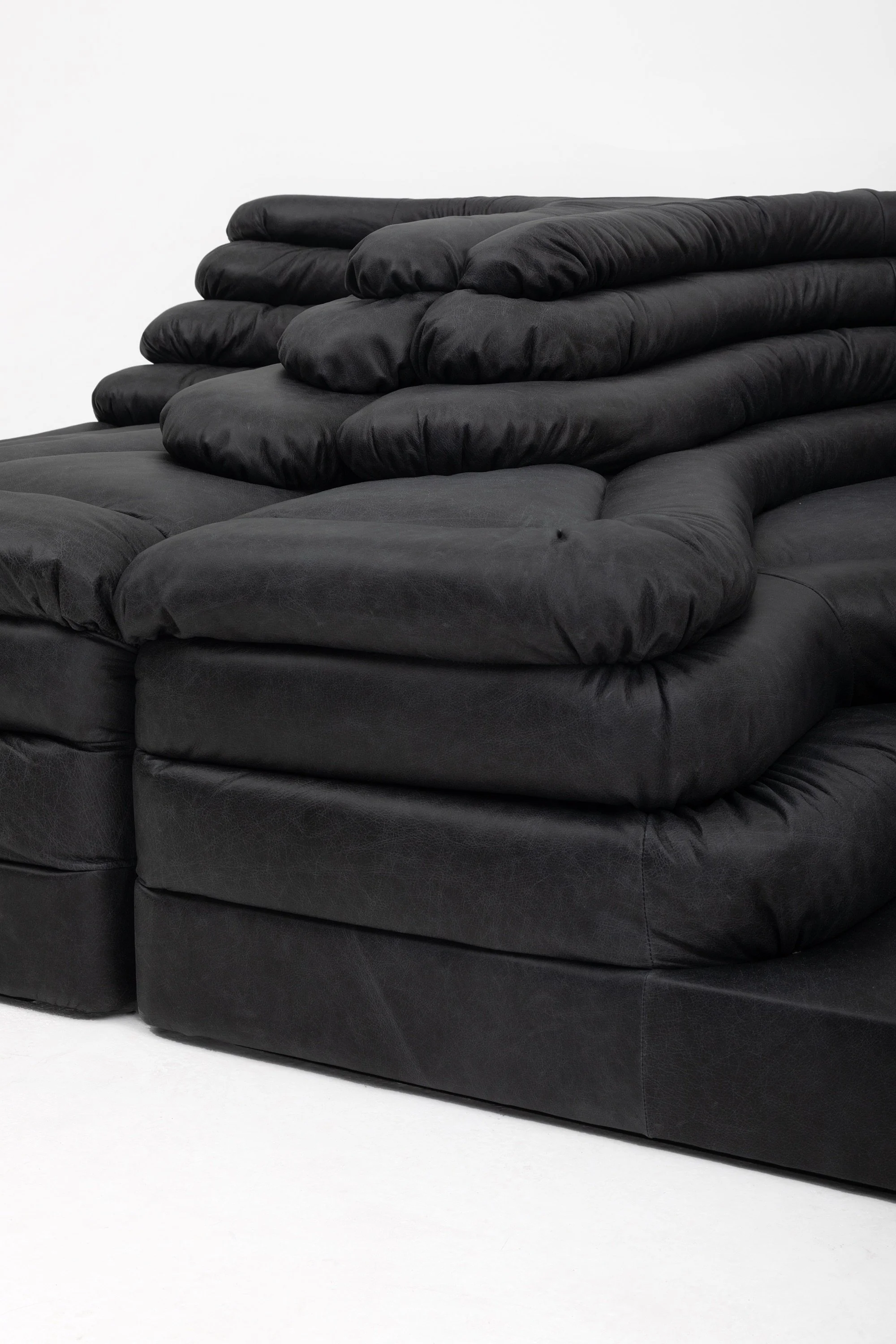 Image 8 of 17
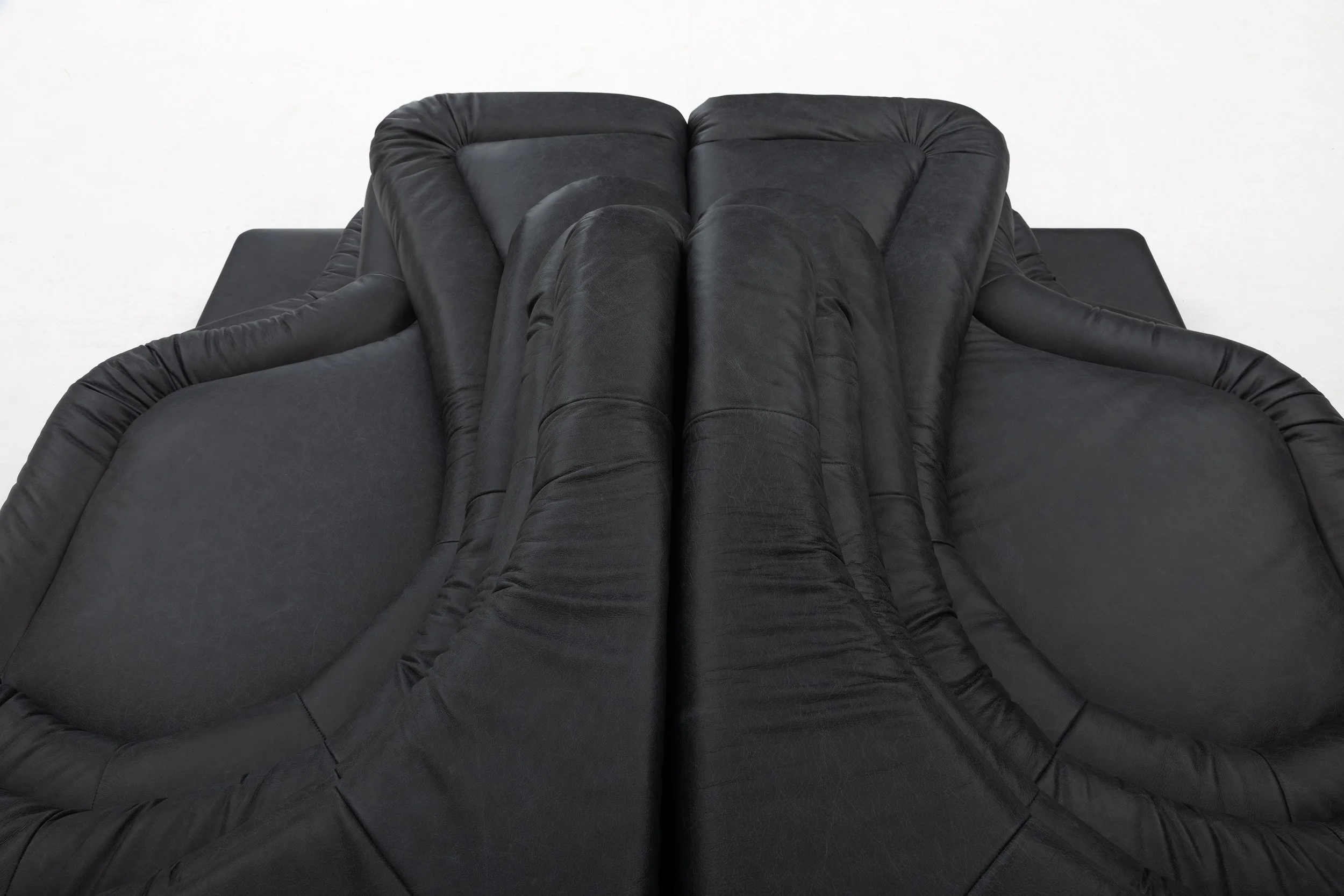 Image 9 of 17
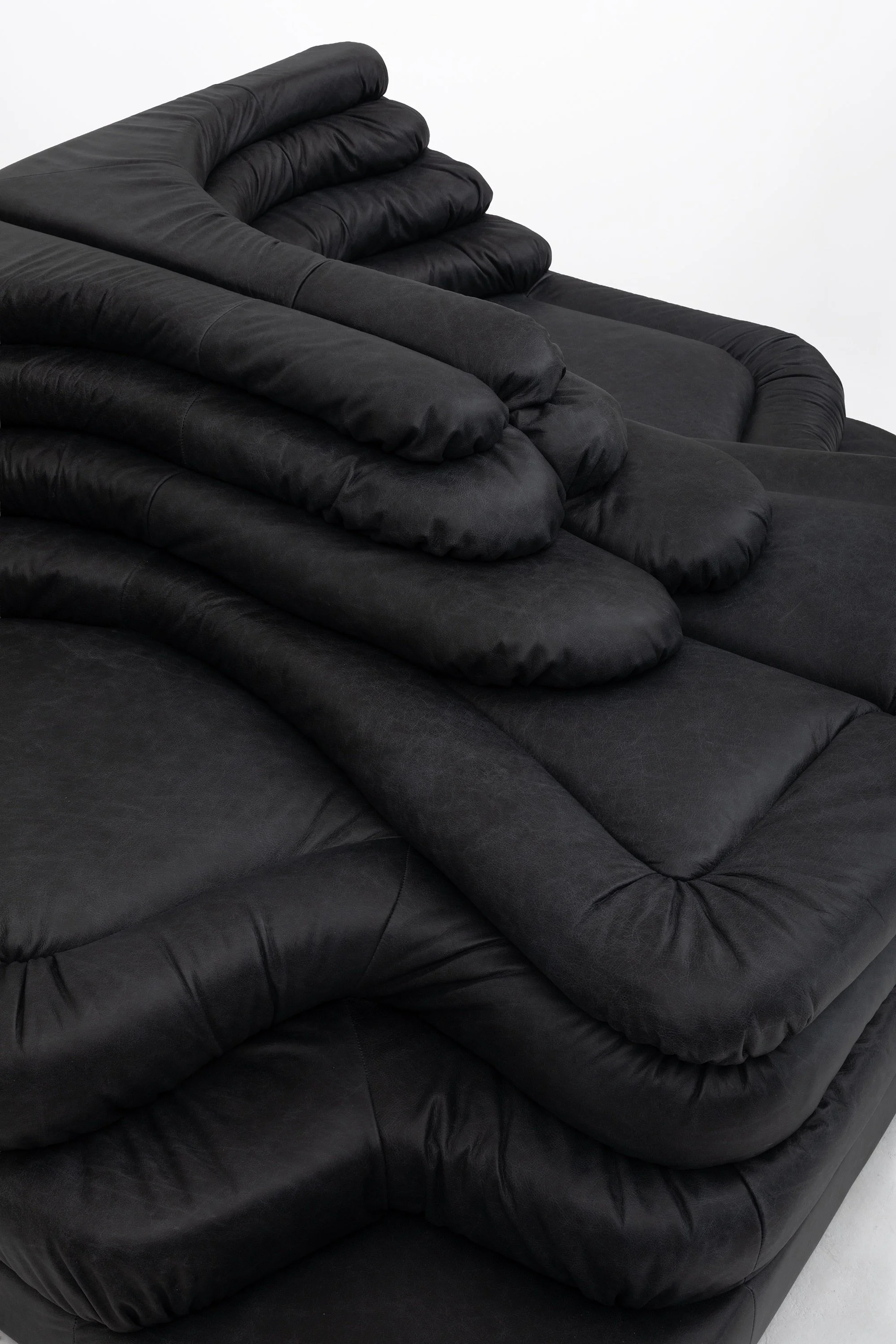 Image 10 of 17
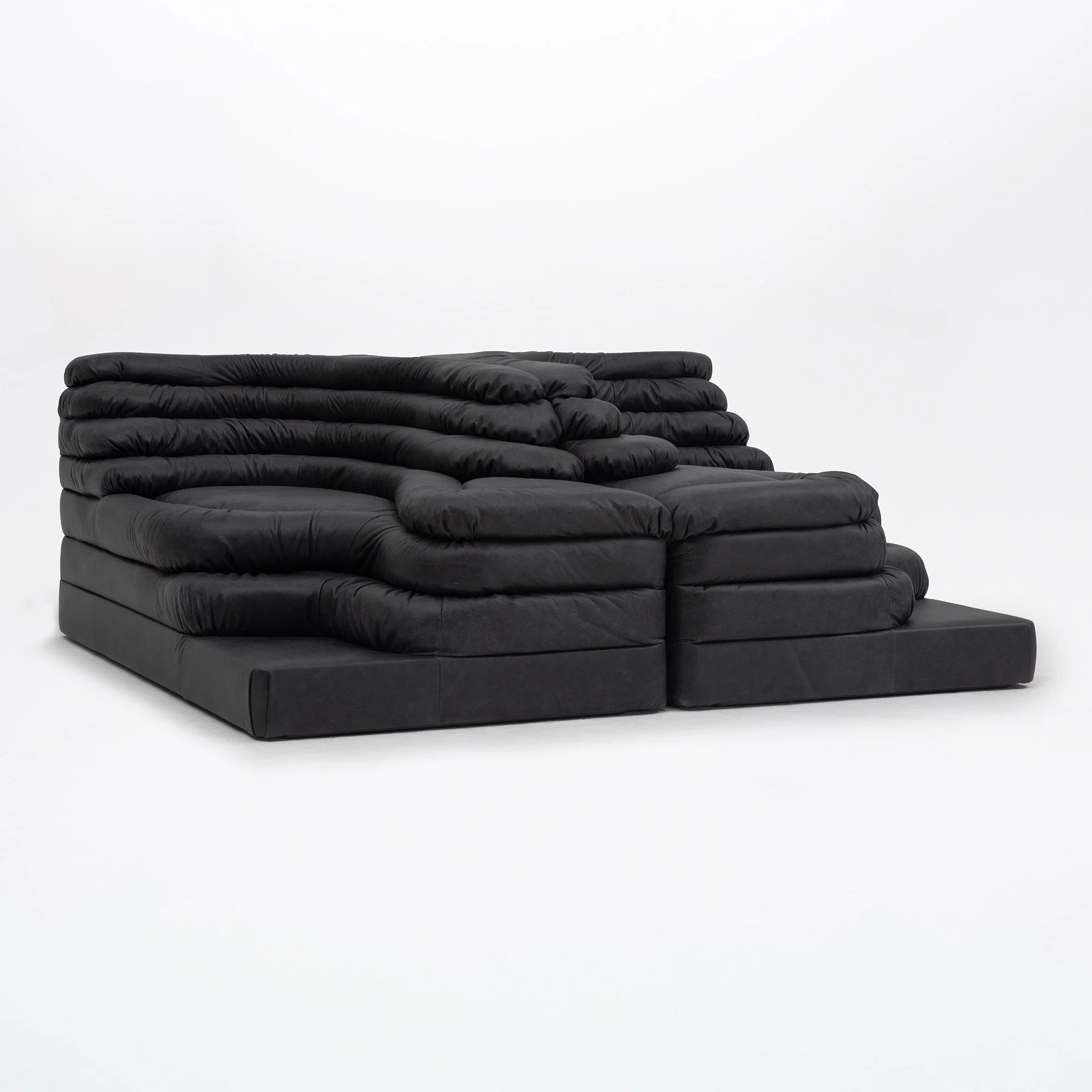 Image 11 of 17
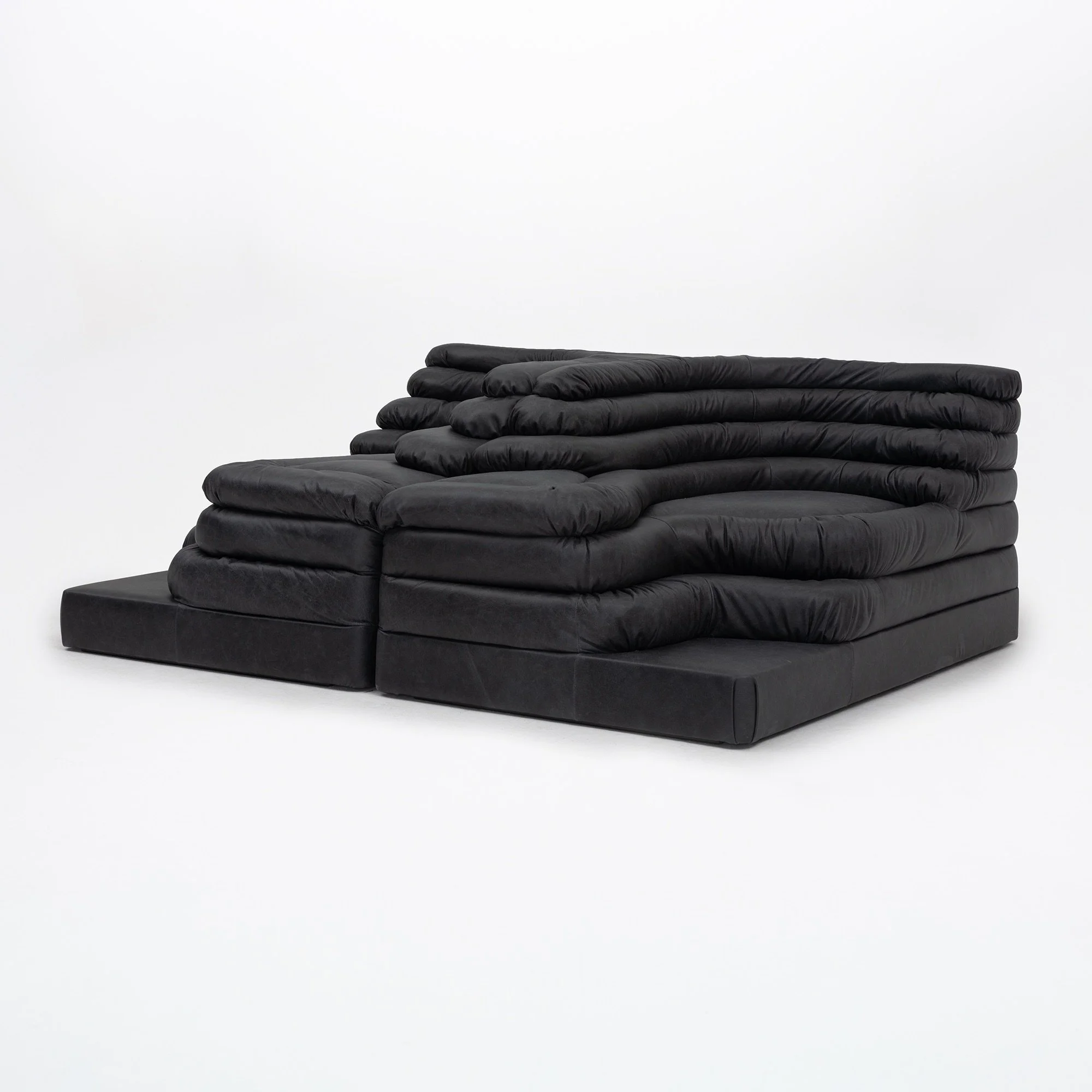 Image 12 of 17
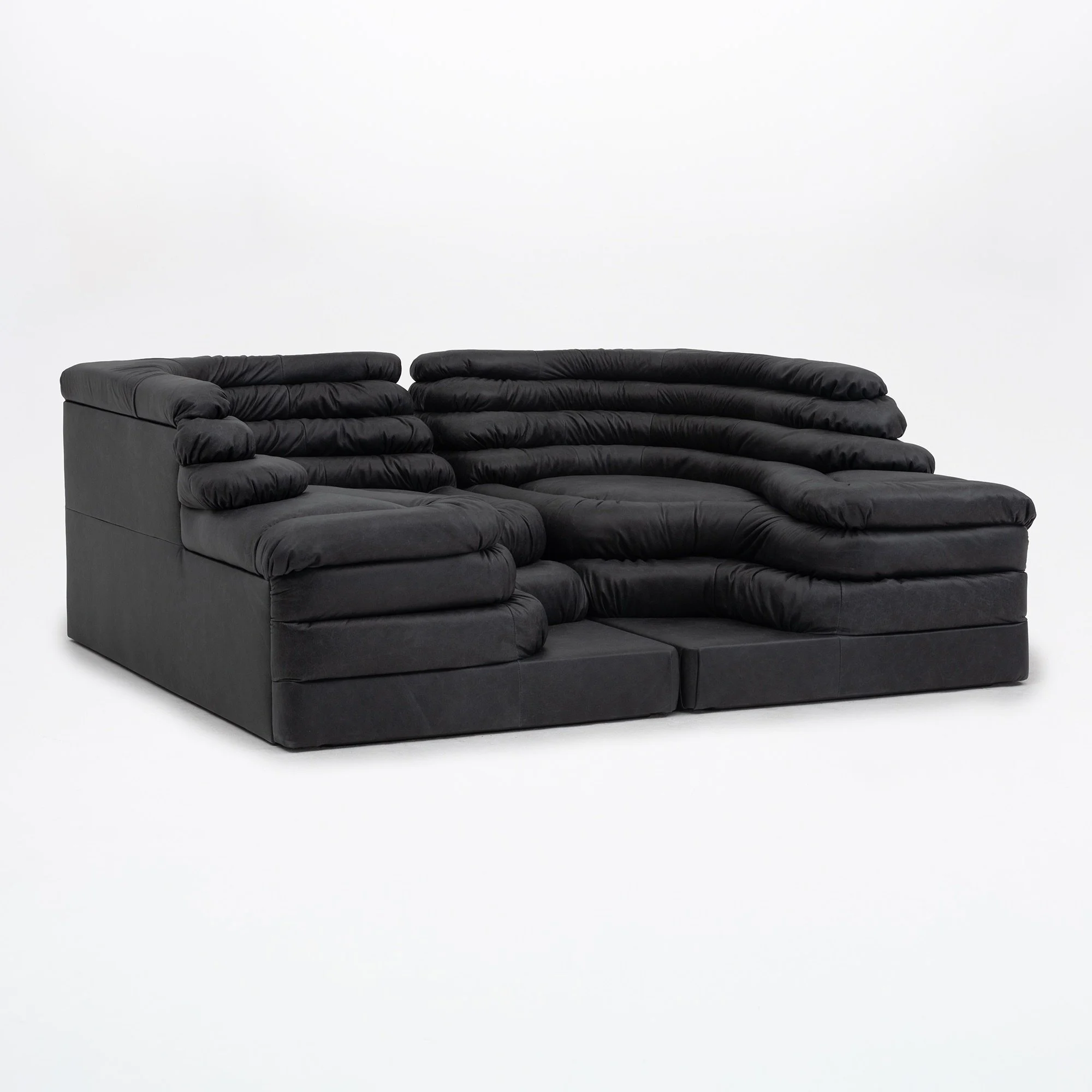 Image 13 of 17
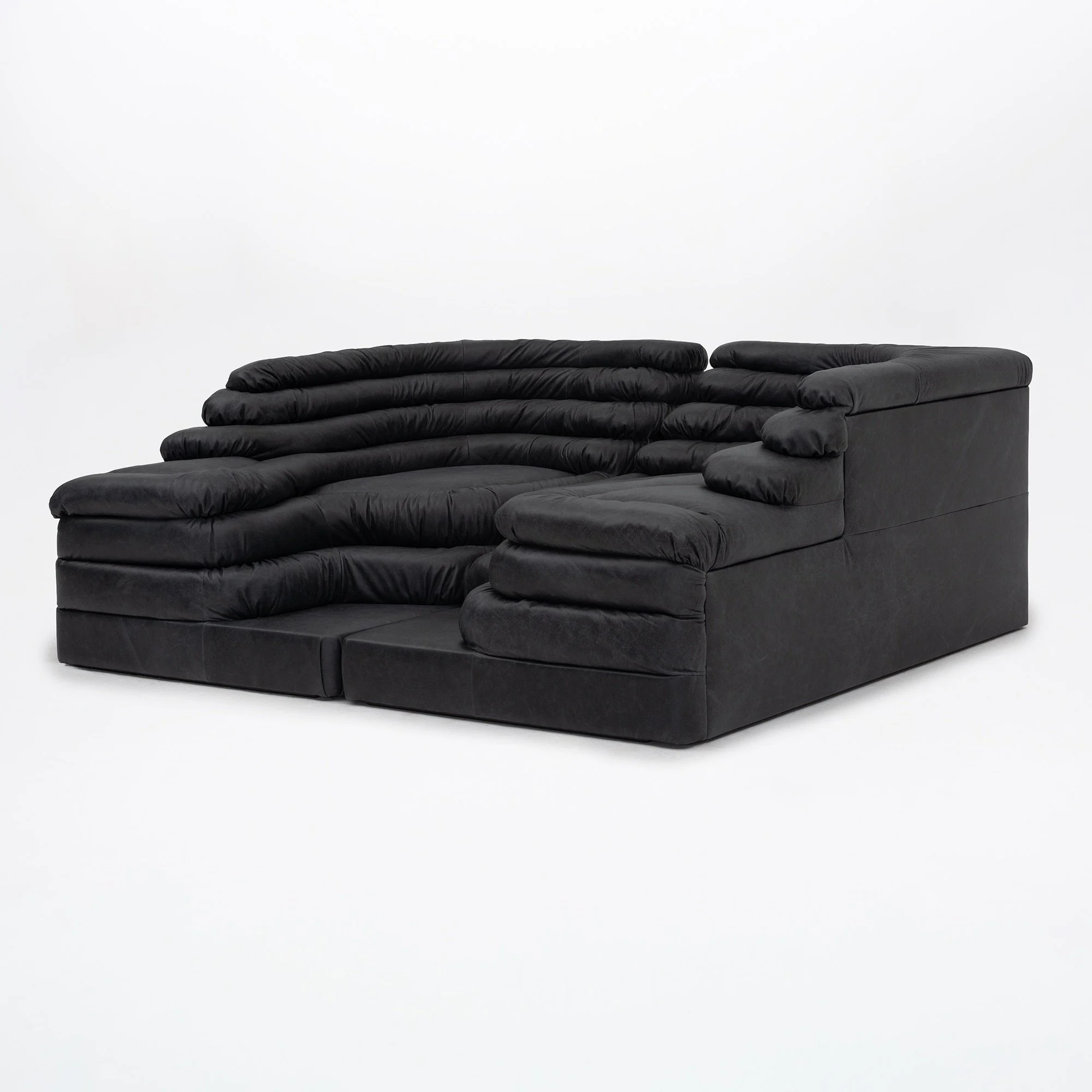 Image 14 of 17
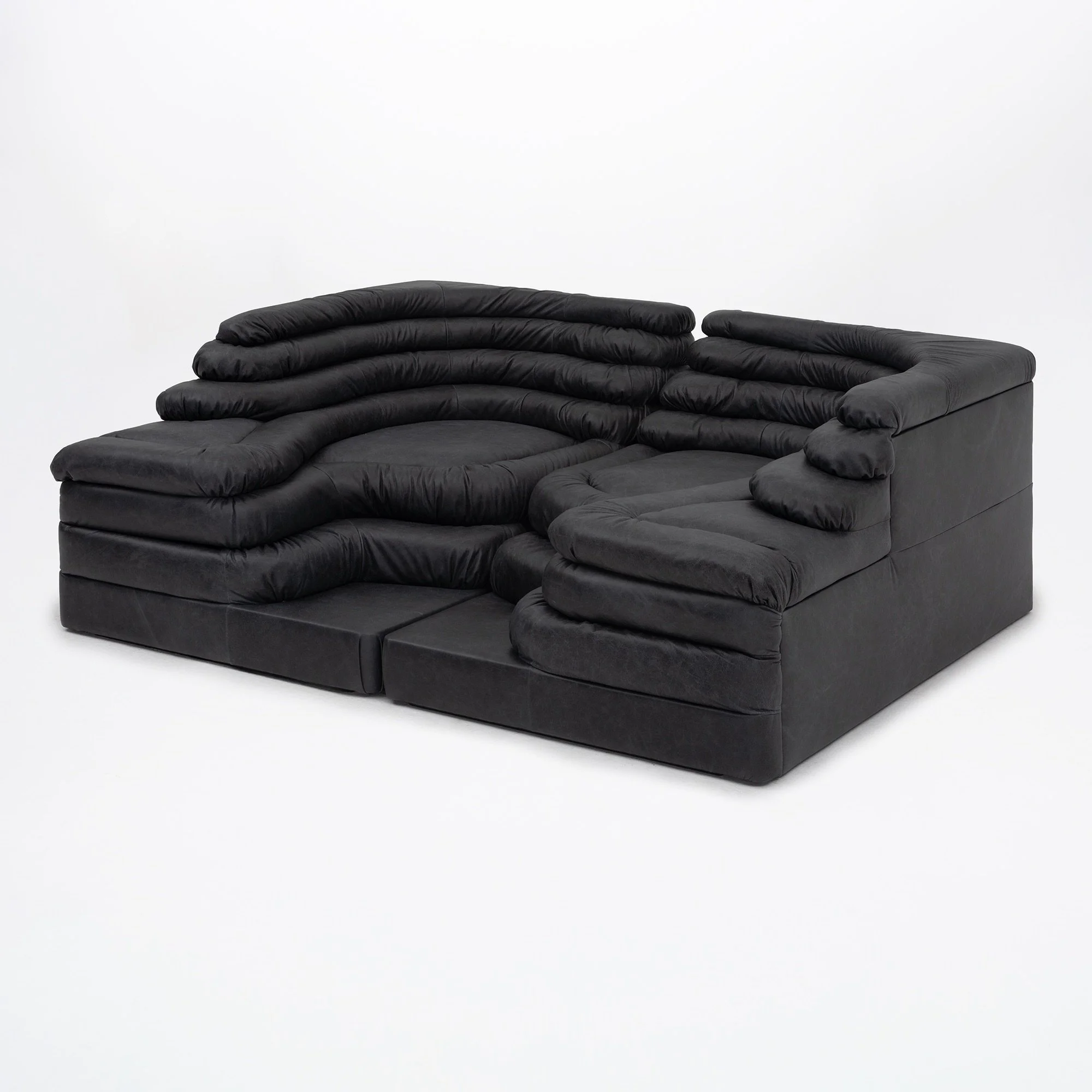 Image 15 of 17
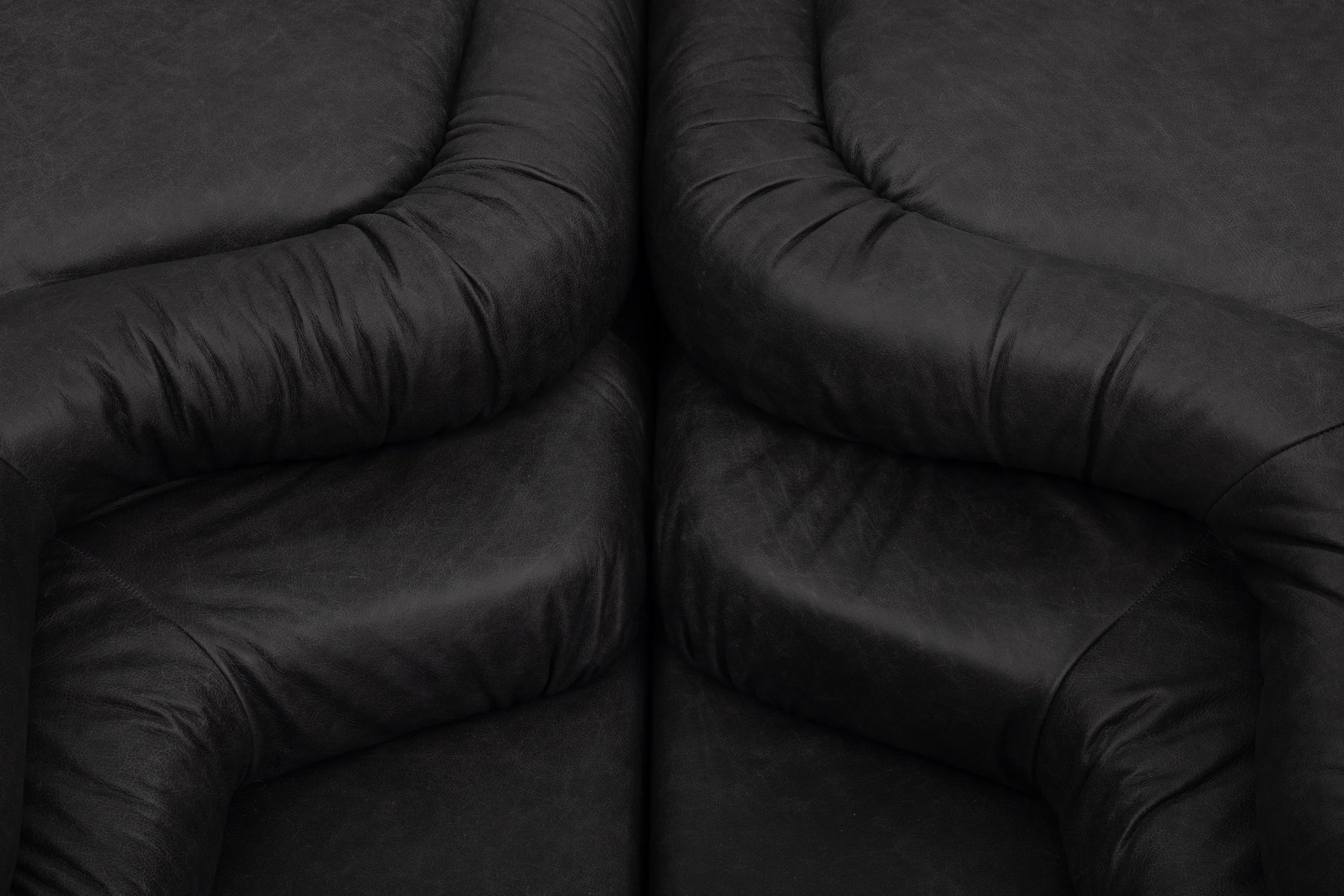 Image 16 of 17
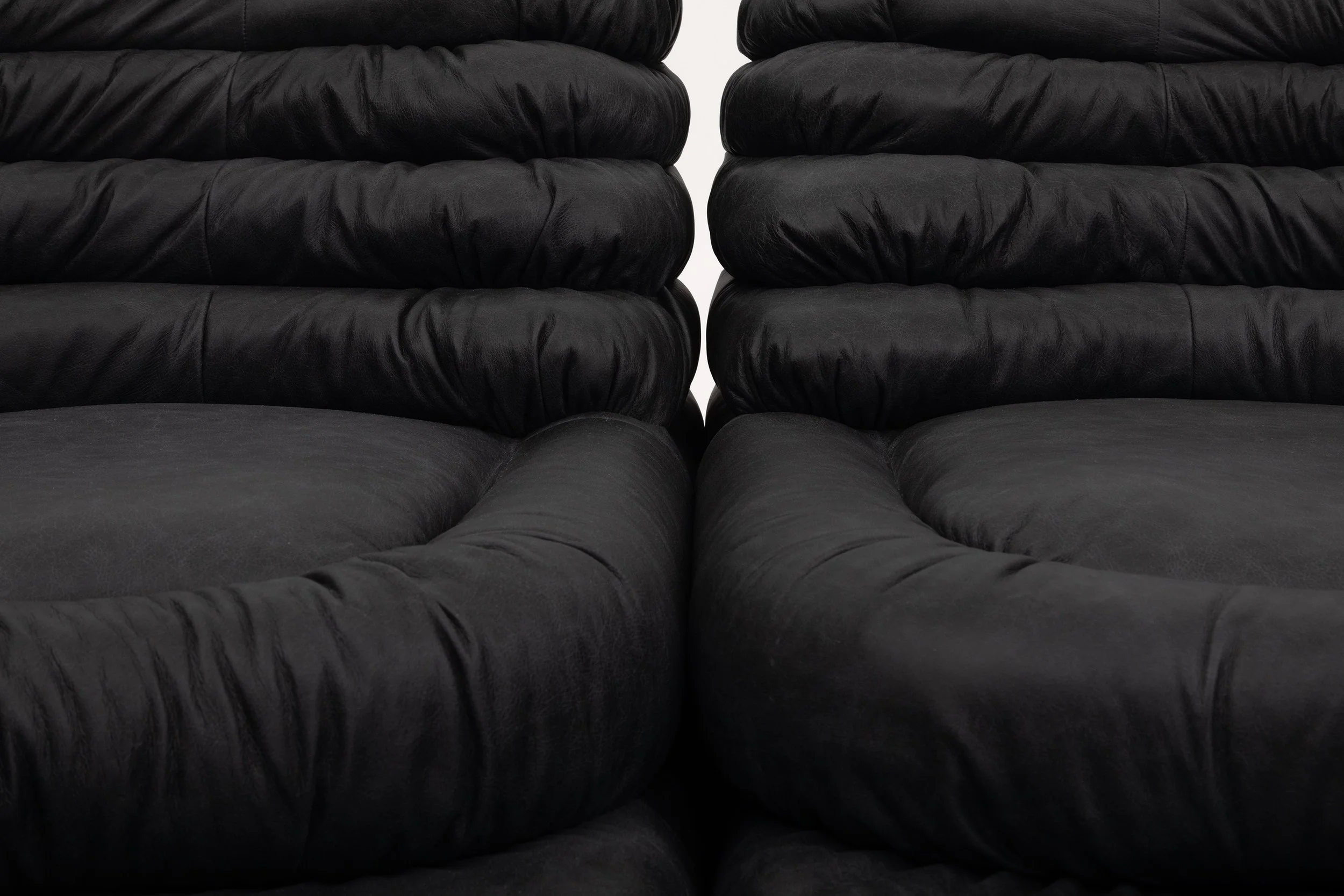 Image 17 of 17