The Carlton room divider is one of the defining objects of the Memphis movement and one of Ettore Sottsass’ most recognizable designs. Introduced in 1981 for Memphis Milano, it functions somewhere between furniture, sculpture, and manifesto — a bookshelf and room divider built from a deliberate collision of geometry, color, and visual tension.
Rather than following the logic of traditional case furniture, Carlton is composed as an architectural construction of diagonals, shelves, triangles, vertical planes, and open compartments. Sottsass treated the piece less as storage in the conventional sense and more as a symbolic structure: part totem, part cabinet, part spatial intervention. It remains one of the clearest expressions of the Memphis idea that furniture could be expressive, disruptive, and intellectually playful without losing its function.
The composition is instantly recognizable. Brightly colored laminate planes intersect with black triangular supports and open volumes, creating a structure that reads differently from every angle. The top section rises almost like a small architectural crown, while the central body anchors the piece with drawers and shelving. It is both highly graphic and surprisingly balanced.
This example is an original vintage Memphis Milano production, retaining the original label. As expected from an early piece of this type, it shows visible wear, including chips and losses to the laminate, consistent with age and use. It remains a highly important and fully legible example of one of the most iconic postmodern designs of the twentieth century.
For collectors, the significance of Carlton is not only formal but historical. More than almost any other single object, it represents the moment when Italian design deliberately broke from modernist restraint and embraced color, symbolism, and visual provocation.
The Carlton room divider is one of the defining objects of the Memphis movement and one of Ettore Sottsass’ most recognizable designs. Introduced in 1981 for Memphis Milano, it functions somewhere between furniture, sculpture, and manifesto — a bookshelf and room divider built from a deliberate collision of geometry, color, and visual tension.
Rather than following the logic of traditional case furniture, Carlton is composed as an architectural construction of diagonals, shelves, triangles, vertical planes, and open compartments. Sottsass treated the piece less as storage in the conventional sense and more as a symbolic structure: part totem, part cabinet, part spatial intervention. It remains one of the clearest expressions of the Memphis idea that furniture could be expressive, disruptive, and intellectually playful without losing its function.
The composition is instantly recognizable. Brightly colored laminate planes intersect with black triangular supports and open volumes, creating a structure that reads differently from every angle. The top section rises almost like a small architectural crown, while the central body anchors the piece with drawers and shelving. It is both highly graphic and surprisingly balanced.
This example is an original vintage Memphis Milano production, retaining the original label. As expected from an early piece of this type, it shows visible wear, including chips and losses to the laminate, consistent with age and use. It remains a highly important and fully legible example of one of the most iconic postmodern designs of the twentieth century.
For collectors, the significance of Carlton is not only formal but historical. More than almost any other single object, it represents the moment when Italian design deliberately broke from modernist restraint and embraced color, symbolism, and visual provocation.

 Image 1 of 20
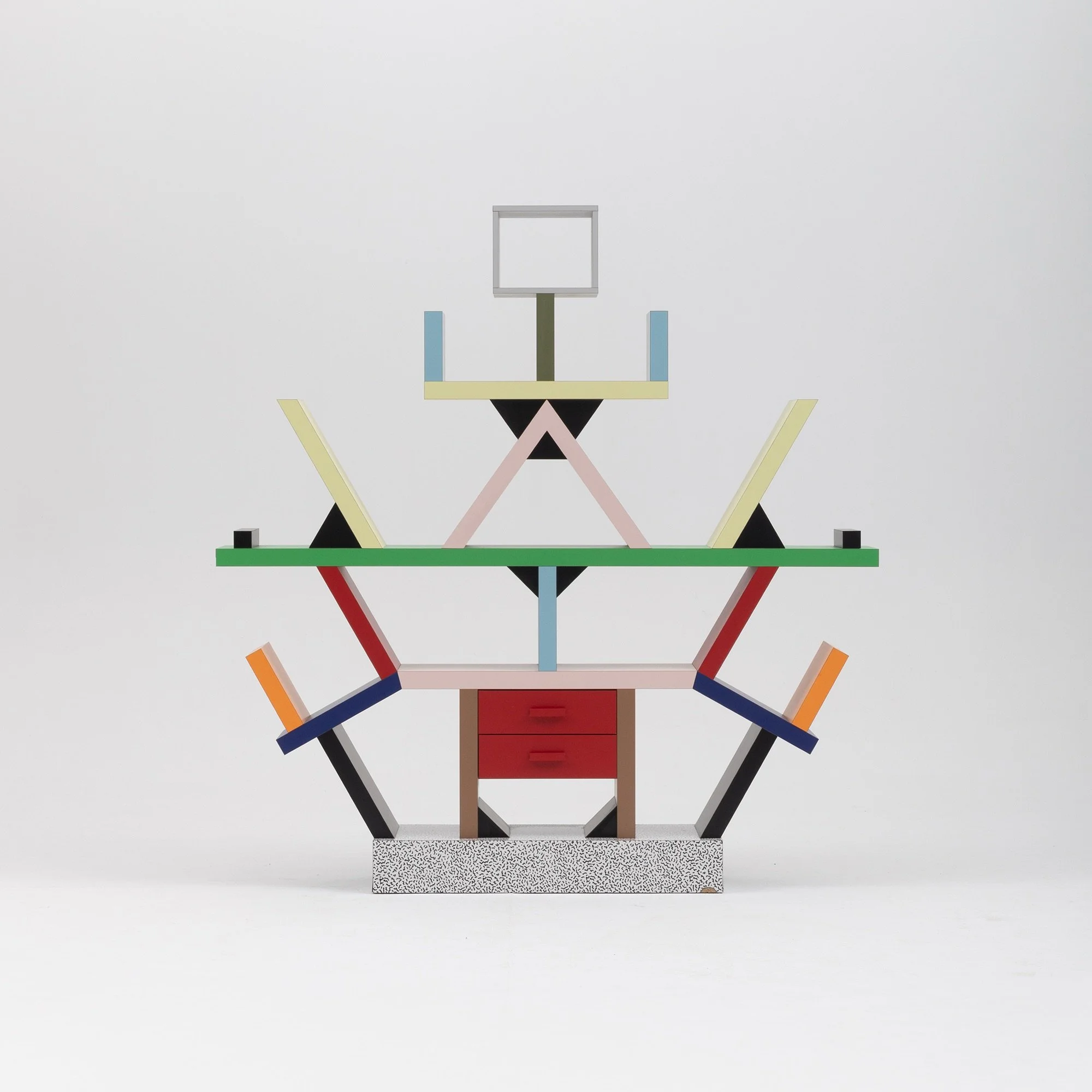 Image 2 of 20
 Image 3 of 20
 Image 4 of 20
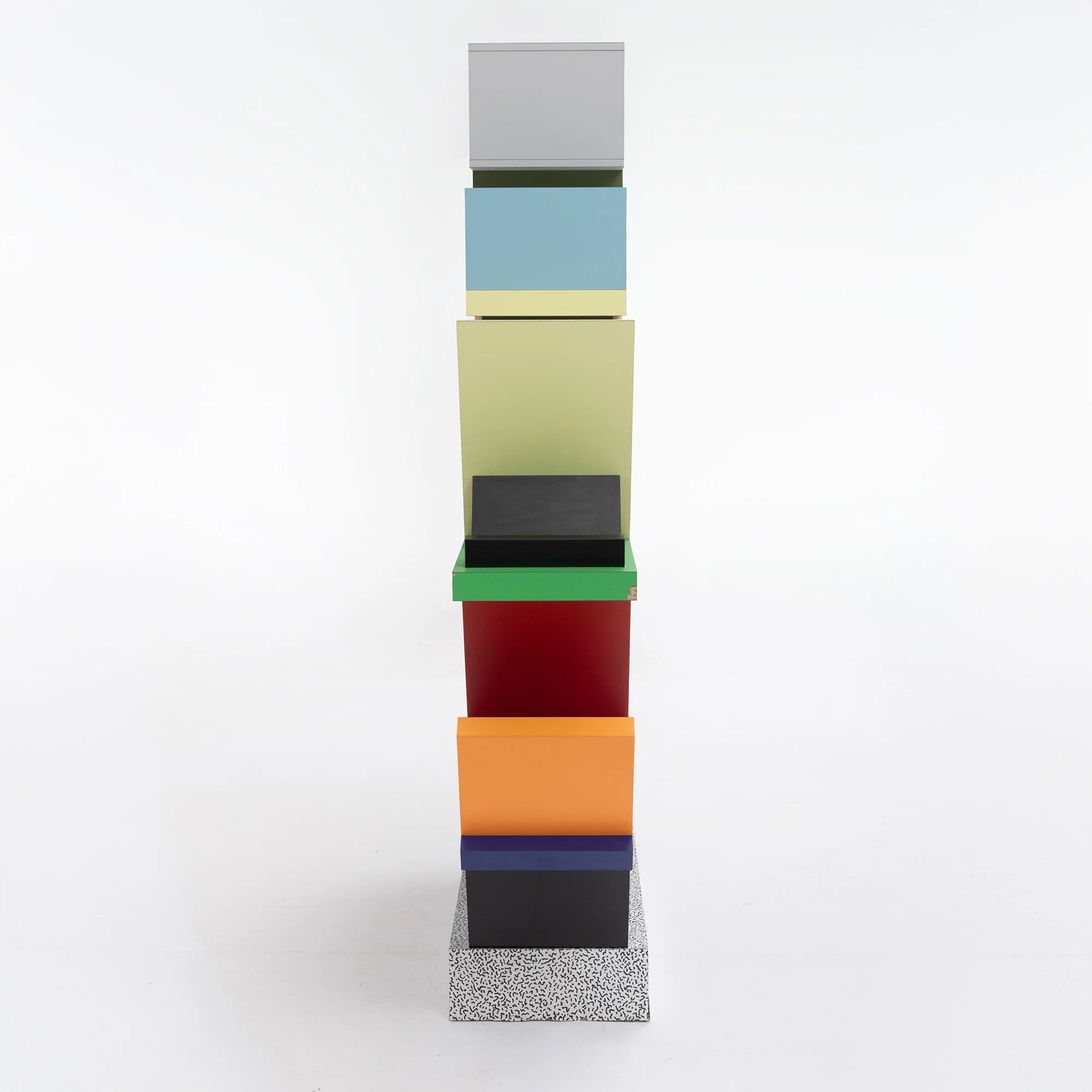 Image 5 of 20
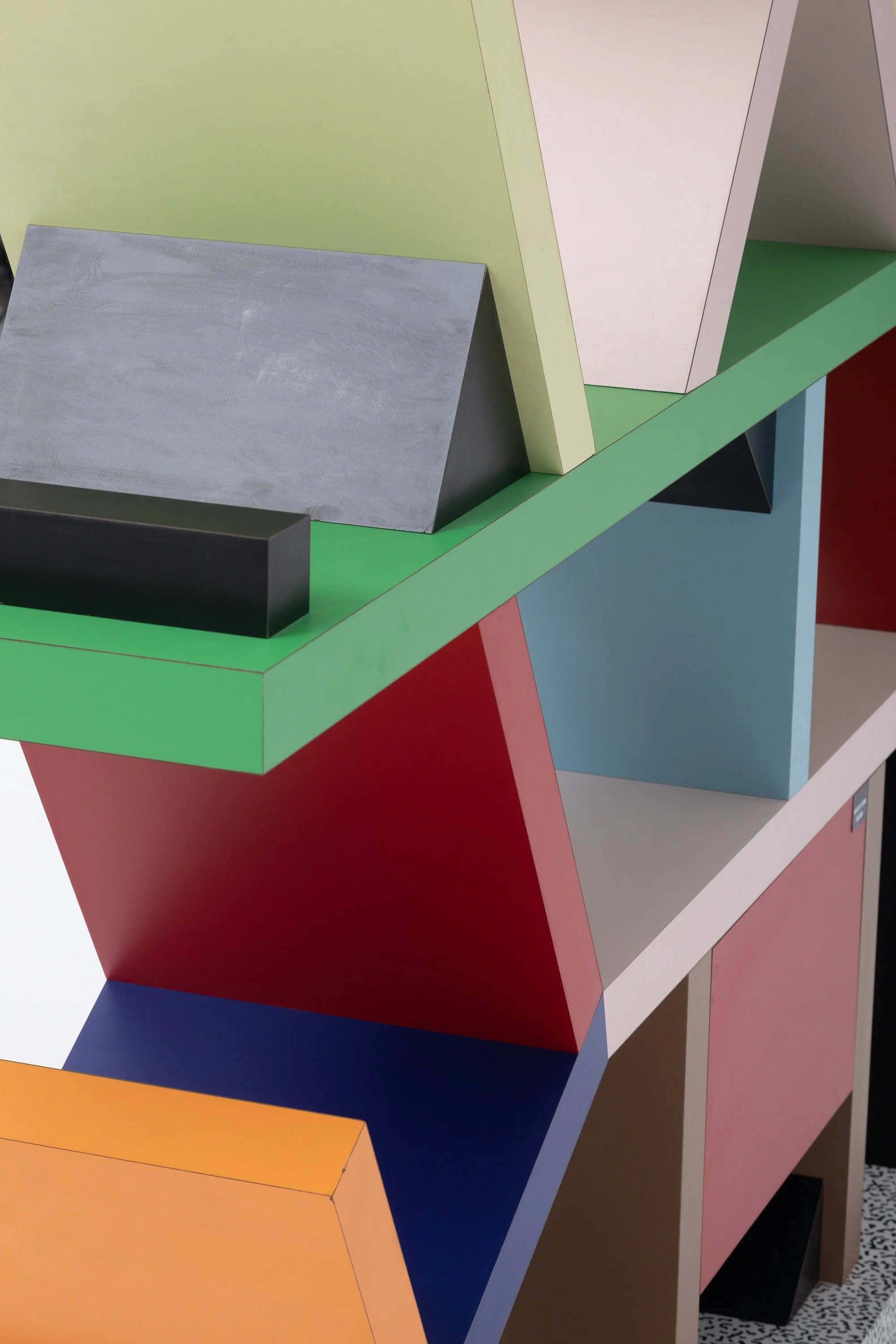 Image 6 of 20
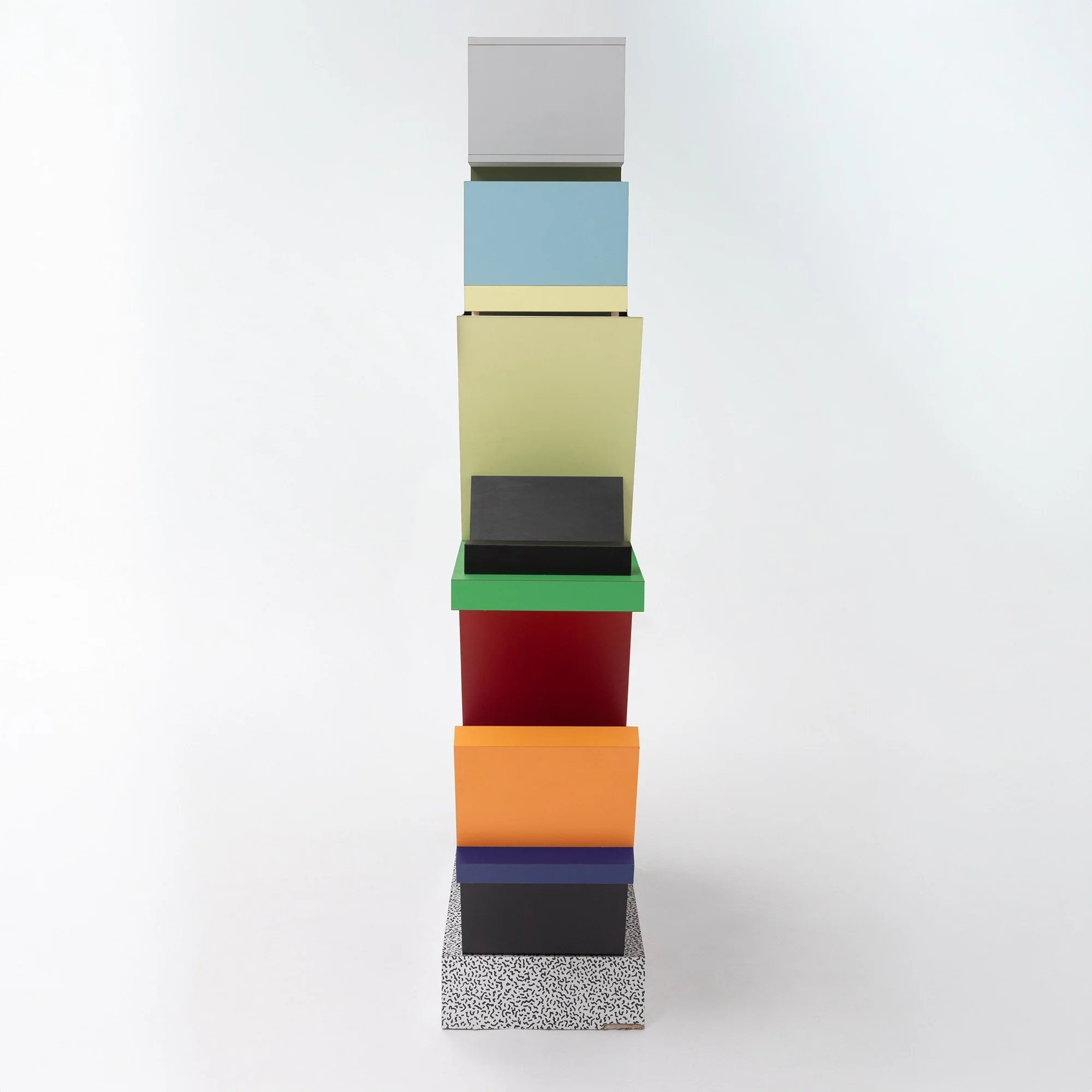 Image 7 of 20
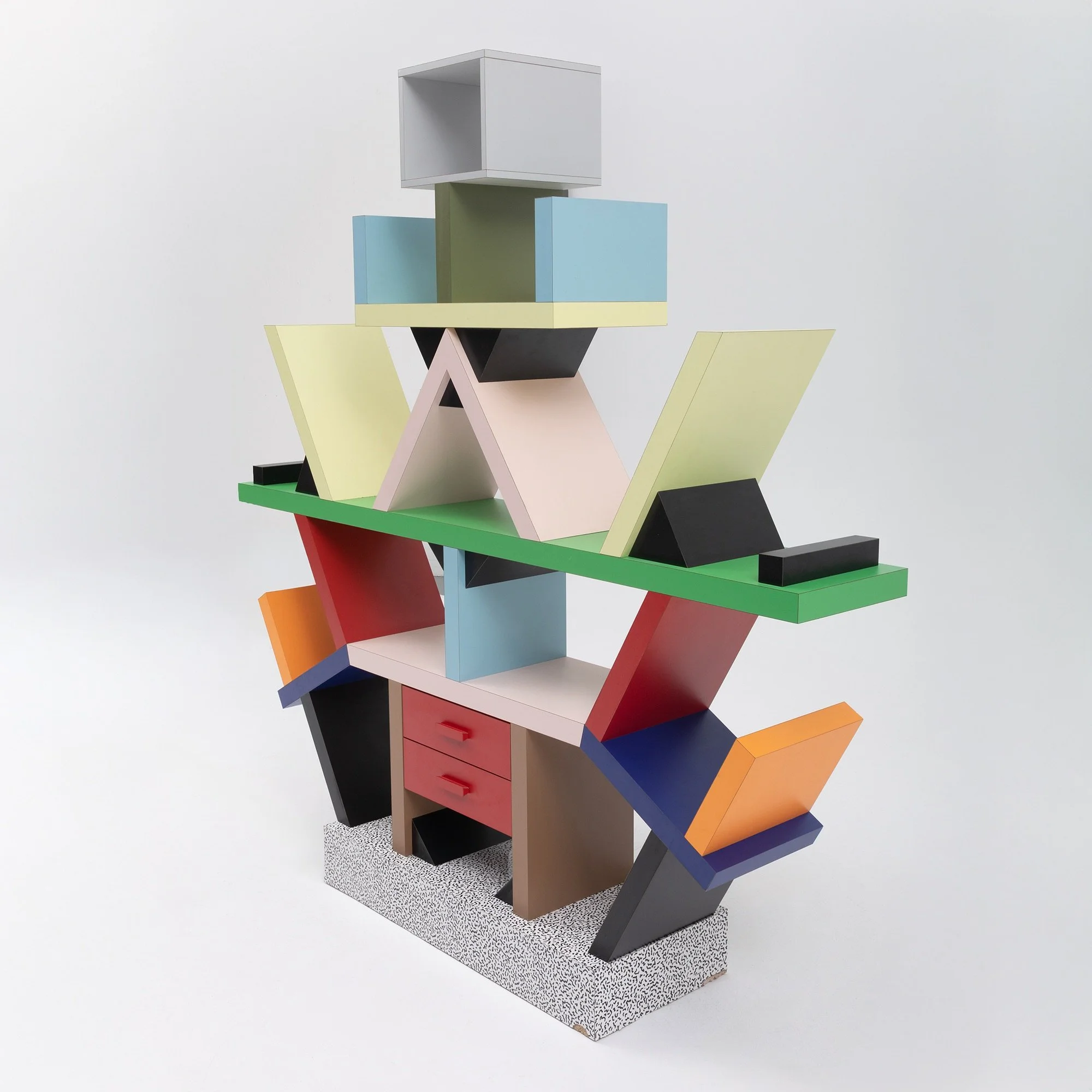 Image 8 of 20
 Image 9 of 20
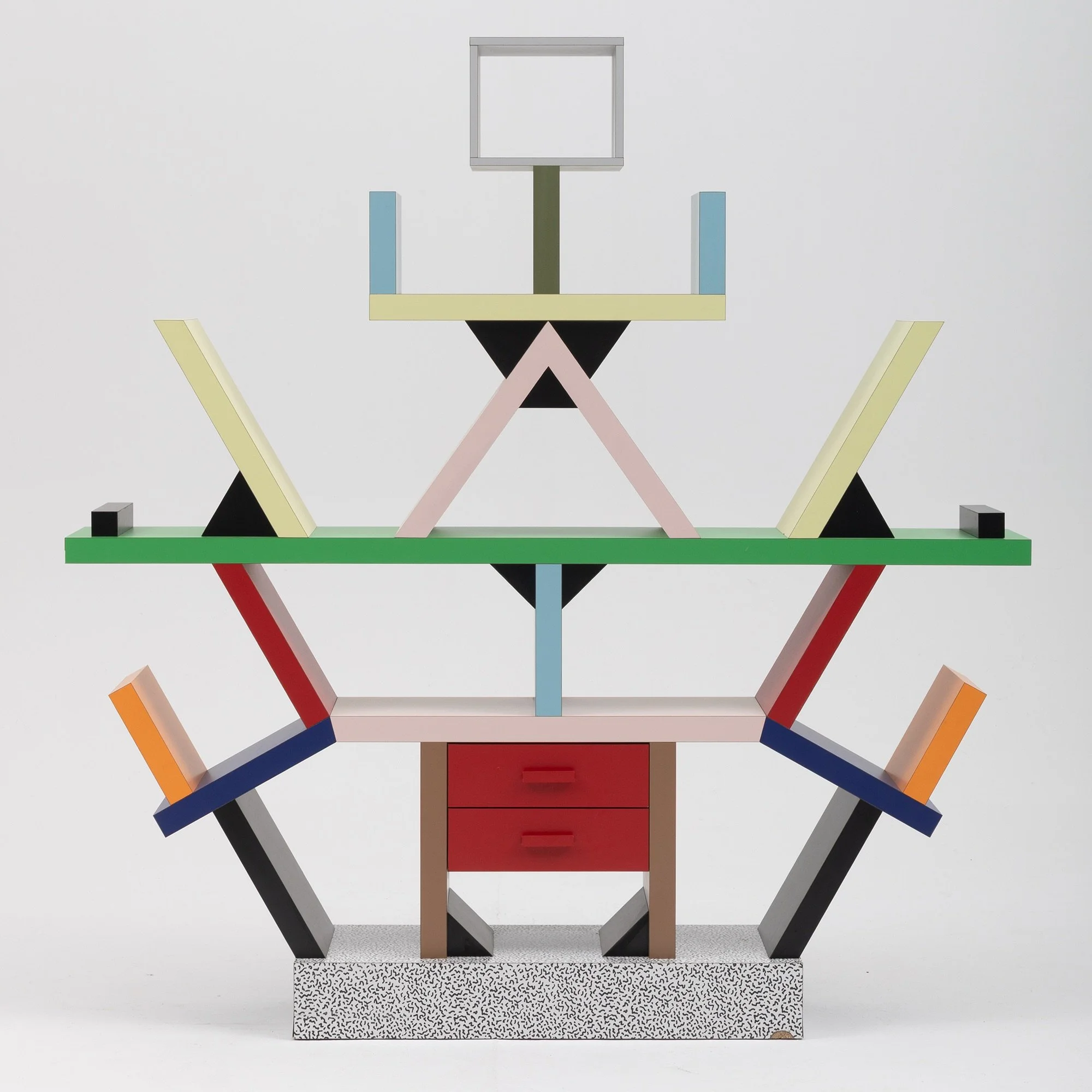 Image 10 of 20
 Image 11 of 20
 Image 12 of 20
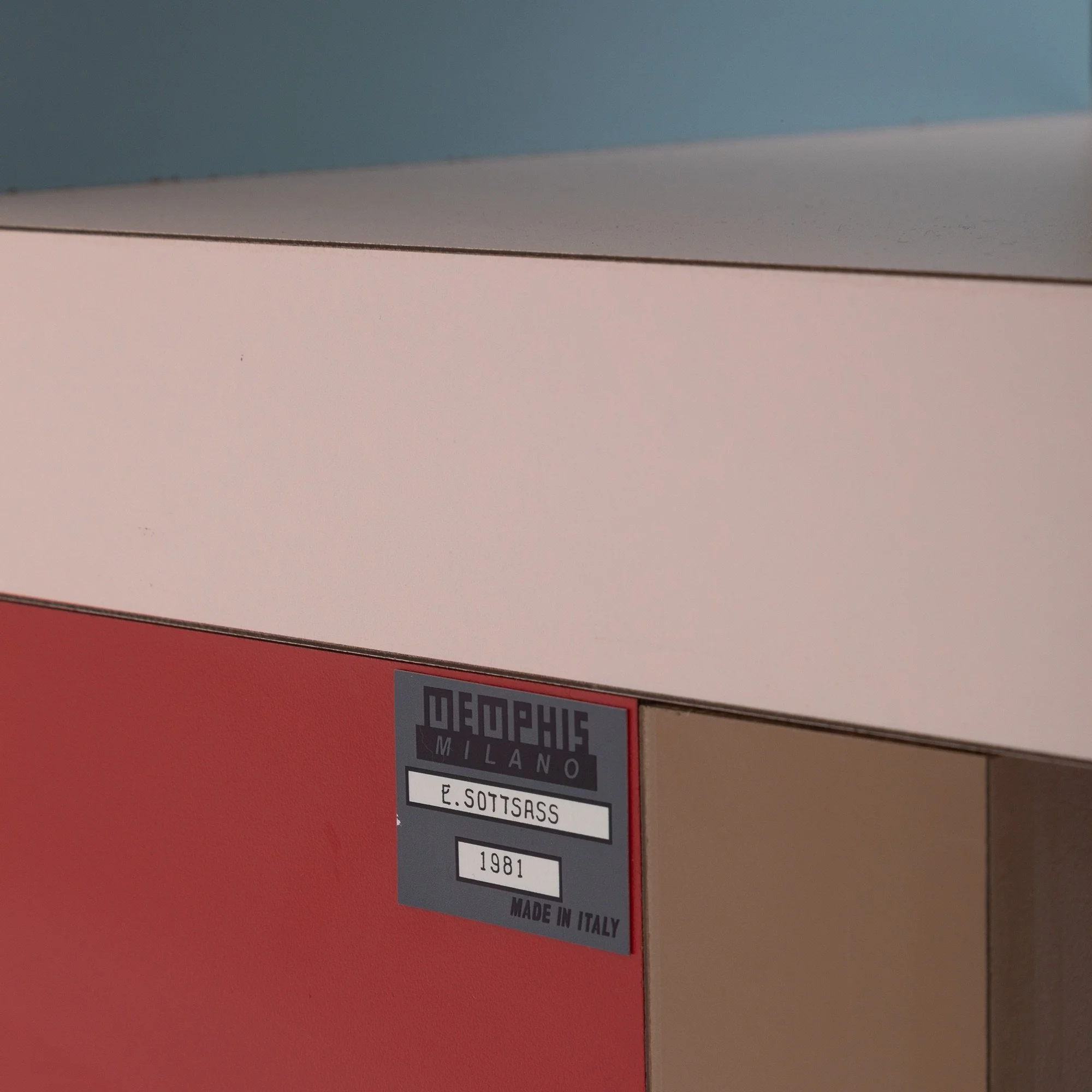 Image 13 of 20
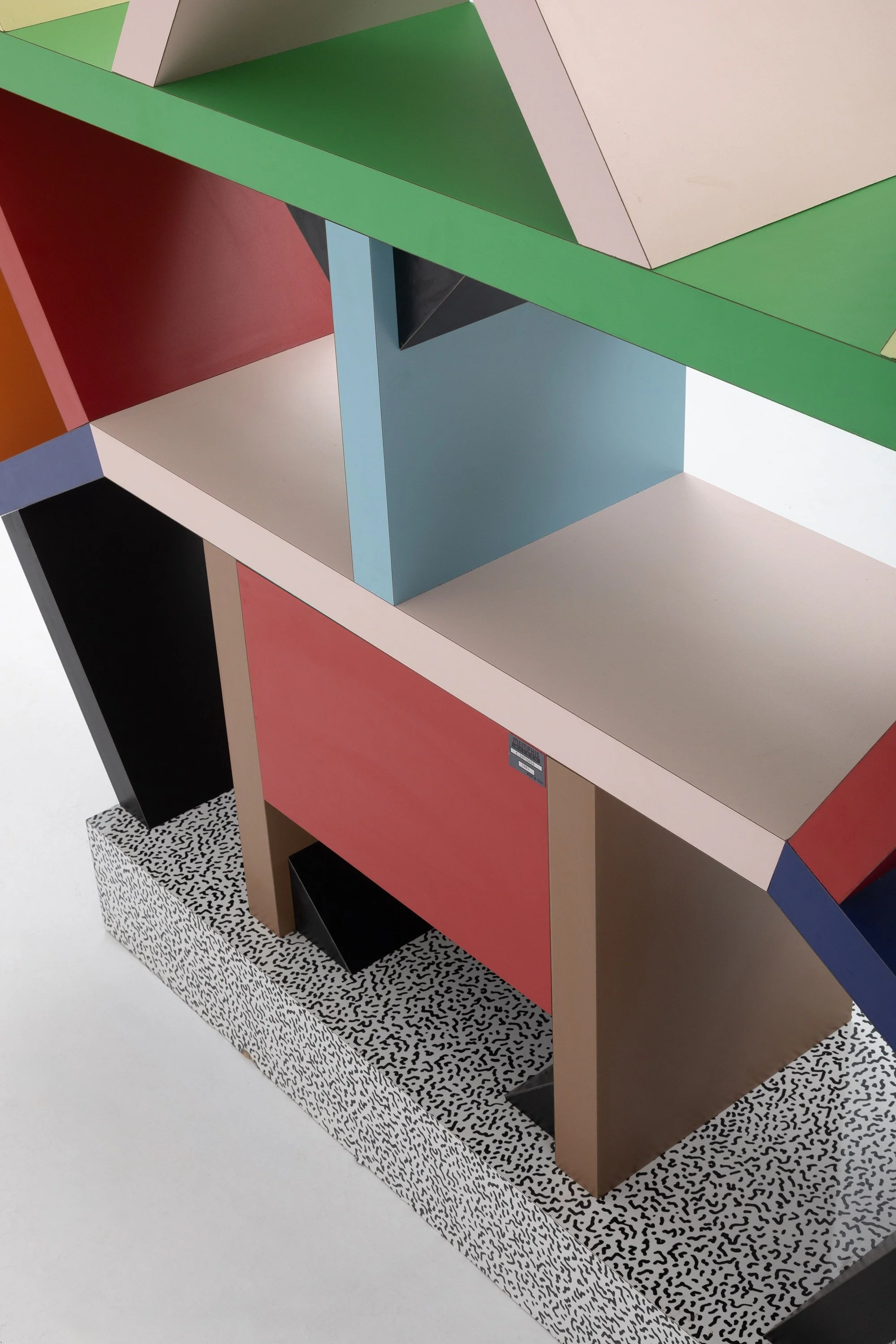 Image 14 of 20
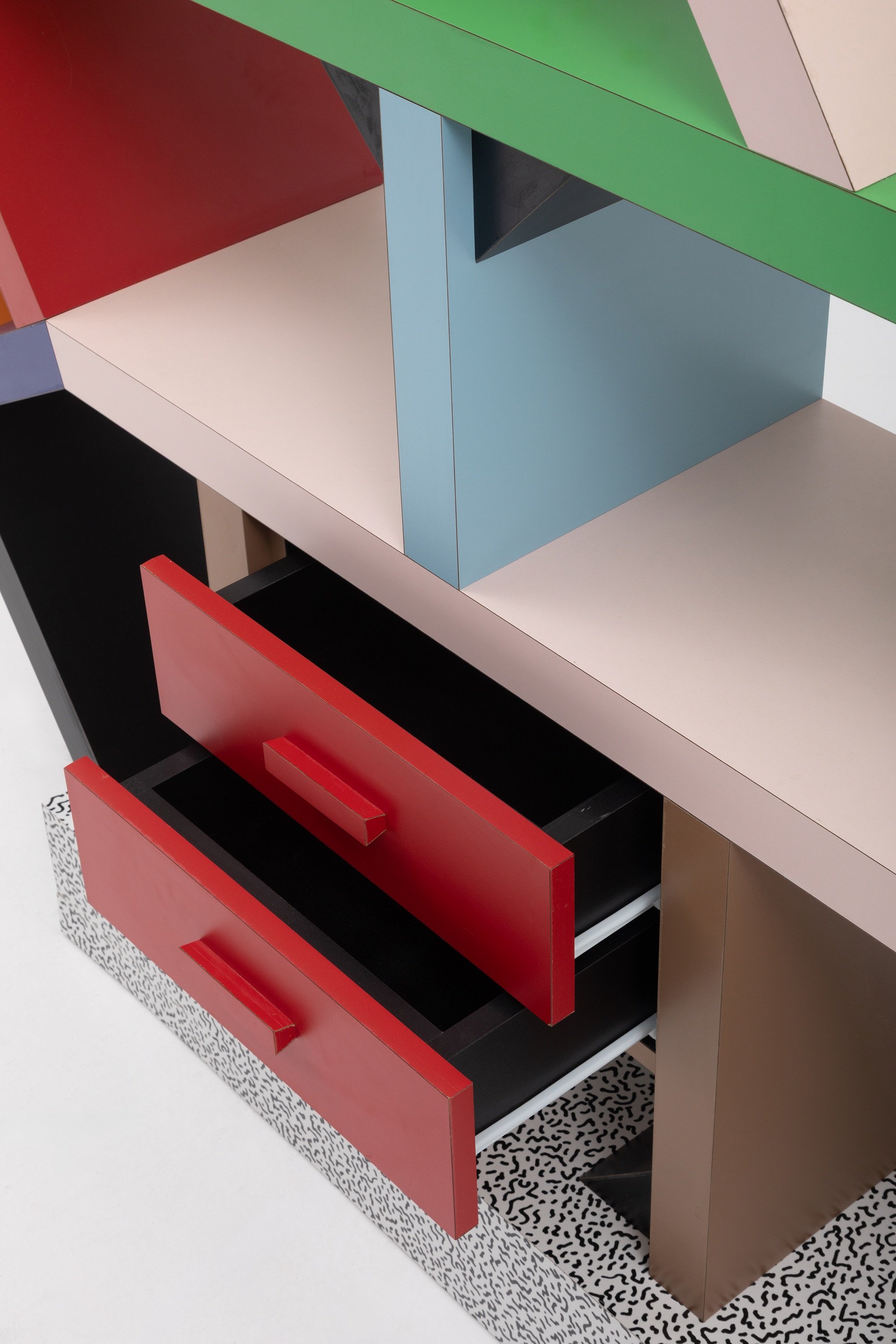 Image 15 of 20
 Image 16 of 20
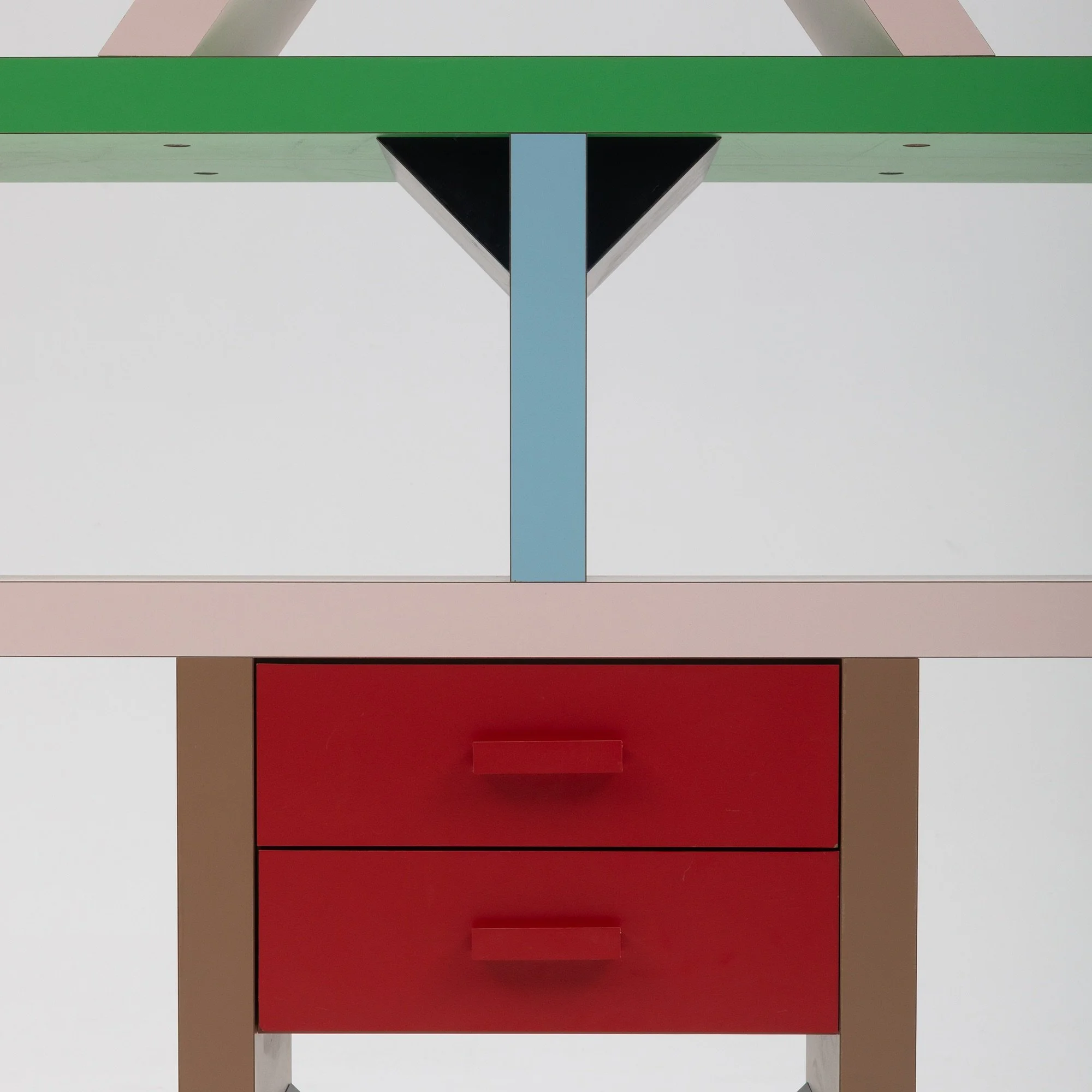 Image 17 of 20
 Image 18 of 20
 Image 19 of 20
 Image 20 of 20